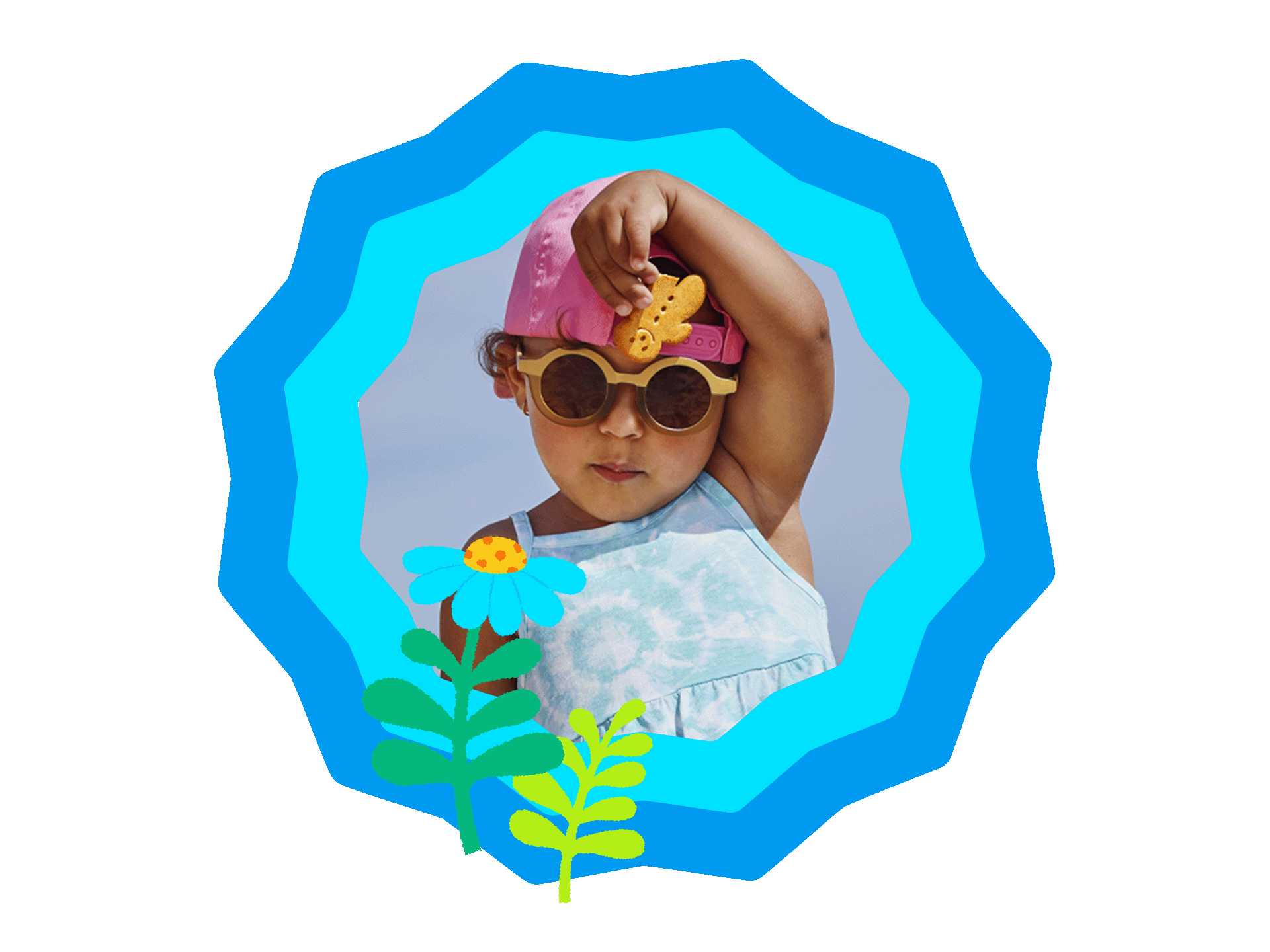
Our Carrot Puffs, Sweetcorn Rings, Veggie Sticks and Tomato Slices are still perfect finger foods for little ones at 6–7 months because they’re made with simple, gentle veg-led flavours… ideal for those very first “ooh, what’s this?” tastes and textures.
Our 10month toddler snacks are now moving to 12 months because they bring a bit more flavour fun to the party. These snacks have slightly bolder, more adventurous tastes, just right for curious toddlers who are ready to explore new flavours and show off their growing foodie confidence. Same delicious Organix foods, just clearer age staging to help you pick the perfect finger food or toddler snack for your littles one.
You’ll also notice our new gang of Organimals…fun, curious, slightly cheeky characters who bring a bit of joy to the packs. They add a gentle sense of play for little ones with friendly, familiar visuals.
Our new plain Rice Cakes are made with just one simple ingredient…organic rice. Nothing unnecessary and nothing artificial, just rice (nice), and they’re great for topping or dipping with avocado, peanut butter or hummus.
We know you’ve been searching high and low for your little one’s faves. We’re updating some age-stage guidance to match new UK government feeding recommendations, but don’t worry, none of our finger foods or toddler snacks have changed, they still taste just as delicious as ever.
Our baby range (6–11 months) will be all about plain, savoury, veg-led finger foods helping little ones discover new tastes and textures.To keep things truly veg-led, we’re saying goodbye to our fruit based and sweeter finger foods and cereals. Yep, that means some familiar products including Ruskits and our full cereal range will be discontinued.
We know change can be a bit of a wobble (for little ones and grownups), but we promise we’re doing this for the right reasons for your lil ballers.
Absolutely. While the pack may show a different age stage, the food inside is exactly the same recipe your little one already knows and loves. We’re simply updating our age-stage labelling to reflect the latest UK government feeding recommendations, helping us support parents, carers and, most importantly, little ones.
Rest assured, nothing about our finger foods or toddler snacks has changed, they’re just as delicious and dependable as ever. Our baby range (6–11 months) will now focus on simple, savoury, veg-led finger foods to encourage developing tastes and textures, while our Toddler & Preschool range (12–36 months+) includes more fruit-based options, all made with organic ingredients and no artificial colours or flavours. If your little one is under 12 months and already enjoys these foods, they can continue to do so safely, we’ve simply updated our ranges to better support each stage of their development.
Our recipes haven’t changed, all of our finger foods and toddler snacks are still made with the same delicious organic ingredients your little ones know and love.
We’re simply updating our age-stage guidance in line with new UK government feeding recommendations to help make choosing the right foods even clearer.
Our toddler Oaty Bars are packed with delicious organic wholegrain oats and juicy raisins, making them the perfect on-the-go snack for little ones. Loved by parents and little ones alike, they’ve even won a Loved by Parents Platinum Award for Best Toddler Snack and we are super proud to announce that they are the No.1 Toddler Oaty Bar in the UK.
That’s why we have crowned them the GOAT of Oat…The Greatest of All Time…a tasty snack for your little ones with the ultimate toddler snack status, made with 100% organic ingredients and no artificial colours or flavours, so you can feel good about every bite!
We use a number of different types of packaging and can confirm that all are BPA Free.
Did you know that a whopping 99% of our packaging is recyclable*? It’s true! Our carton board is not only fully recyclable but also proudly carries the FSC certification.
When it comes to our flexible film, almost all of it can be recycled right at your local store. That means you can collect your biscuit bags, bar wrappers and snack bags and take them along to your nearby supermarket. Check out recyclenow.com to find your closest drop-off point.
We make it easy to identify which of our products can be recycled by displaying clear UK recycling logos on all of our packs. You’ll know whether it's recyclable at your store, kerbside or not recyclable.
Exciting news! Our cereal bags are currently on trial using recyclable (at-store) film and are set to be launched in early 2024, fulfilling our target of 100% recyclable packaging! Woohoo!
*By weight, in the UK.
You can be the first to learn about any upcoming changes to our foods here: Changes we are Making.
Healthy snacks play a key part in developing a love of good food and helping fuel little tummies – so we will always strive to make only the best foods for your little ones. That means putting nothing unnecessary in our foods and making sure everything is in a suitably sized portion pack or with guidance on portion sizing by age. In the UK, public health guidance recommends that snacks for children do not exceed 100 kcals per portion, hence our Mini Gingerbread Biscuits are now under 100 kcals per bag – to help you make snack times even healthier.
Any single or combination of fruit and veggies totalling 40g counts as 1 of your baby’s 5 a day – so where a meal contains, for example, 93g of fruit and veggies within the recipe, we will have stated that it includes 2 of your baby’s 5 a day. Please note that according to NHS guidelines, potato does not count towards 5 a day, which is why they are not included in the total of fruit/veg per recipe.
For dried fruit, the equivalent of 1 tbsp. counts as 1 of a child’s 5 a day.
Meal Pots should be consumed as part of a varied and balanced diet, including fresh fruits and vegetables.
We have different levels of risk regarding the presence of allergens or risk of cross contamination in our foods, and we want to give you as much information as possible to help you make a decision as to whether the food is suitable for your circumstances.
There’s a few ways you can find out:
On our packs
- Any allergens that are present in our foods, including cereals containing gluten, are shown in bold in the ingredients list.
- We also declare which allergens our foods may contain in our Safety Advice section on pack. We carry out a risk assessment to determine whether an advisory statement is needed and try to avoid a blanket ‘may contain' statement on our foods, as this can be equally unhelpful. Just because an allergen is present in the same factory, it doesn't necessarily mean there is a risk of cross contamination, and if this is not stated on our packs then the allergens are fully controlled to prevent the risk of cross contamination.
On our foods pages
- Where you can find all the allergen information about each food.
- This has a list of all our foods with information about which allergens are in the food and whether allergens are present in the factory where they’re made. To view our Food Information Sheet please click here.
We at Organix are committed to participating in the Dorset Sustainable Palm Oil Community project.
We’ve removed palm oil from five of our six recipes and we’re reformulating the last remaining recipe to make sure we are palm oil-free by 2024*.
The Palm Oil that we currently use is RSPO Sustainably sourced palm oil.
By doing so, we know that we are fighting climate change and also helping to protect wildlife around the world from the impact of unsustainable agricultural practices.
*Subject to global availability.
As part of our ongoing sustainability commitments, we will be palm oil free across all of our Organix foods by Feb 2024. While you can expect the same great taste your little one’s love, removing the palm oil means our ingredients are more responsibly & ethically sourced and we are actively reducing our environmental impact, creating a brighter future for little ones and the planet.
All four UK Health Departments and the World Health Organisation (WHO) recommend babies are exclusively breastfed for the first 6 months of life, and continue to receive breastmilk throughout the first year and for as long after that as mum and baby want to continue. At Organix, we support this.
Breastmilk will provide enough energy and nutrients for growing and developing babies until they reach six months of age. Babies are rarely developmentally ready for solid food before about six months of age.
At around six months of age, your baby will need nutrients not available in adequate amounts in their milk alone, so at this time it is important they are introduced to solid food that is nutritionally adequate and safe while breastfeeding continues.
The important thing to remember is that if your baby is ready for solid food all three of the signs below will be there. Your baby is ready if they can:
1. Co-ordinate their eyes, hands and mouth, can look at food, grab it and put it in their mouth all by themselves.
2. Stay in a sitting position and can hold their head steady.
3. Swallow their food. Small babies instinctively use their tongues to push foreign objects out of their mouths, and until this reflex fades, they are likely to do the same thing to a spoon or a piece of banana.
For more about when and how to start introducing solid food to your baby take a look at our advice here
Our foods labelled 12month+ are not suitable for little ones under 12 months as the foods could pose a choking risk. When feeding them to your 12 month+ child please make sure they are sitting down and supervised to reduce the risk of choking.
You can click the unsubscribe link/s on any email you've received from us or log in to your account and update your preferences directly. If you have any issues at all, just get in touch and we'll look into this for you.